Thursday, April 28, 2011

Linsey Dawn Mckenzie Belly Ring

few words in memory of Carlos Eduardo Zavaleta Jorge Eduardo Eielson


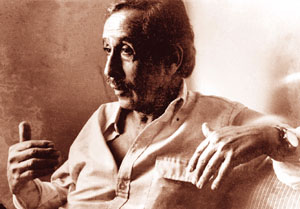
Carlos Eduardo Zavaleta, the brilliant storyteller who gave us unforgettable stories, has departed. For those who were lucky enough to be his students and colleagues at the Universidad Nacional Mayor de San Marcos, is an irreparable loss, not only because his name is associated with the most remarkable stories of Peruvian literature, but also because he was a researcher and indefatigable translator. He always talked about their projects with a contagious enthusiasm, was planning to publish a book or two this year, but death does not allow it. Carlos Eduardo met in the courtyard of the Faculty of Arts. We shared our admiration for the prose of Raúl Porras Barrenechea. I had an unforgettable gathering about the author of historical sources Peruvian , I always recommended reading some tests and Porras admitted being an admirer of his style brilliant. Zavaleta was also a translator of the poetry of James Joyce and is responsible for the incorporation of the techniques of William Faulkner in contemporary Peruvian fiction. It combines the work of the narrator with the essayist and researcher. Spirit multifaceted, cosmopolitan intellectual, but interested in the symbolism of our Andean world, Zavaleta will live on in his work, invaluable legacy for future generations.

Photo (source): www.unmsm.edu.pe

Friday, April 22, 2011

Tank Purge Dip System Advantages

MAS SKULL Skeleton


I have not put any new photo, but are made of a few days ago. I leave with two new models of bracelets with skulls that both are wearing this spring. These are made from the skulls of howlita, diecast parts, pink cat eye glass. Hope you like. Good weekend.


Saturday, April 16, 2011

My Friend Got Engage Message

in memory (final)


Once Delgado heard from Washington that, for him, the first half of the twentieth century Peruvian poetry was dominated by César Vallejo, whereas the second by Jorge Eduardo Eielson. I think in both poets may find the most representative aspects of contemporary Peruvian poetry. For example, the modernist legacy is in The Black Heralds, the Symbolist mark (so essential to the artistic movement of Rubén Darío) is Kingdoms. The poet came to Santiago de Chuco Trilce to the top of the avant-garde literature; Lima writer concocted an imaginary neovanguardista in Room in Rome. Paris modernity meant for Vallejo, Rome was for Eielson. It is interesting that both writers conceive some of his greatest poems in Europe, but there is always breathe a critical view of Western modernity. Eielson criticizes the nuclear danger and the reign of the consumer society in Rome, Vallejo, meanwhile, in "The wheel of the hungry", portrays the misery of the migrant in Paris. Without doubt, the best tribute to a poet is to read and make your message persist over time. This brief stop to immerse myself in rereading of Room in Rome, an essential poems of Latin American literature.

Thursday, April 14, 2011

Easy Legendary In Pokemon Deluge

Jorge Eduardo Eielson in the memory (I)


A was born April 13 poet Jorge Eduardo Eielson (1924-2006), a complete artist in the fullest sense of the word. Performed poetry, novels and the visual arts. Unobjectionable bill concocted works. Perhaps the three most notable poems are Kingdoms, Room in Rome (probably his magnum opus ) and Dark Night of the body . In the novelistic genre, gave the press a remarkable text: Main Giuliano. Went into exile and died in Milan. In Kingdoms, is the survival of a symbolist poetry so dear to Stéphane Mallarmé, but there are breaths also the atmosphere of Rainer Maria Rilke. Poems like "Ravel's Tomb" are among the best works of literature in English. Room in Rome marked a turning point: the poet ventured to confront the issue of modernity and to criticize the standardization of life in big cities. Rome is the prototype of the modern city, threatened by the nuclear and the consumer society. Dark Night In body, Eielson explored the corporeal substance to advocate a fierce introspection and to account for the fragmentation of the arms and legs of human beings.

(To be continued ..)


Photo (source): http://poesiaentrevista.blogspot.com/2006_08_01_archive.html

Sunday, April 10, 2011

White Tux With Hot Pink

Current poems

It is interesting to some current situation with the poets, a result perhaps of the greatest poets that everyone knows. Thanks to them, many people were inspired and motivated to write well. That's fine. The downside are the readers and supporters of the main poets. How often and how many have not been cut the inspiration and motivation to write because they believe it will not be well received. How many have seen others write and think "just that it planned to write so many weeks ago, and was not made by the same critics say few paint art critics claimed).

may happen one of two situations (maybe more). If one writes poems inspired by famous poets, fans say, "And you? you think 'foo'?" or 'quiet' foo '. " Which is often discouraging. Or if you write with a different style, fans will say "What rubbish!" because it is similar to 'foo', the immortal. Lot of motivation on the part of fans who do not dare to write that only kiss the feet of the famous writer.

some fans will say, "but there's contemporaries who write very well." Interestingly generally refer to foreigners (the same or different style of eternal forever). I wonder if it will happen well in other countries. Much of this I have seen in "slippers" (the who know me know what I mean with "clogs").

I like to see some writing their poems. Many will like. Some may not be my style, but how good they do. Sometimes I feel that "just had planned to write something."

immortal The trouble is that there are some fatal chance to immortalize themselves.

Nursing Diagnosis For Cellulitis

of cameras (and cars)

seems that in these times is no longer has respect for professional cameras as before.

Many people seem to believe that they have become great photographers have very good cameras. I've always had a phrase: "The car does not make the driver." Many are not increased its lack of personality auto tremendous that even worked.

believe that the real-professional photographers, professional amateurs, people with lots of practice and experience, deserve more respect. Many people get their large chambers that lead to all kinds of events provided to show them off, or is it really necessary to use a professional camera 35 or 55mm to capture the group of friends having a beer or shots of tequila?

I think they really know how to use a professional camera know how to exploit something beyond the image, known capture something extra that is transmitted in an emotion of those who see the pictures. That's why I respect and admire

Wednesday, April 6, 2011

How To Unrestrict Shower Heads

How to Read a Poem (final) Amayo Daniel Magallanes


Terry Eagleton, in the third chapter of How to read a poem , examines the contribution of the Russian formalists, among which Viktor Shklovsky, Roman Jakobson. Discusses the theory of estrangement or de-familiarization of objects is accomplished in a poem, so that the reader seems to see for the first time, "a stone" freed from its everyday context and machining. Principle that no doubt has its limits, since it relies on the theory of diversion, by which a poetic statement constitutes a violation with respect to the literal sense of the word. If the theoretical foundation is universalized, then it shows its limits: there are poems that are based on everyday language and which employ very few metaphors. Subsequently, Lotman puts Eagleton as a descendant of the Russian formalists unorthodox: "Poetry [as Lotman] activates the body entirely significant. Simultaneously exploding sound, its meaning, its form, intonation, rhythm, symbolic value, and so on, releases its most intense potential "(p. 68). The English critic questions what he calls" fallacy of the Incarnation, "for which the poem" embodies "the meaning, ie becomes things. Here, based on Lotman, Eagleton emphasizes that the poem as a semi-autonomous system is on the other systems such as the language, therefore, although there is a reasoned relationship between the level of signifier and signified, the first does not become the second. The author of How to read a poem remarks that in a poem is accompanied by verbal effects of moral perceptions, as a poetic text speaks of ethical values \u200b\u200bwithout falling into a mere moralizing or didactic teaching. In the fourth chapter, "In Search of the Shape", develops the idea that literary forms are not slaves of the content of poetic discourse, but there is a link between the semantic and aspects of shape (like rhyme , rhythm or syntax) in a poem. Eagleton here is unequivocal: "Not all critical statements have to be a what in terms of how. But we can say, however, that the prototypical act of criticism is exactly that "(p. 83). And the poetry is more radical, formal features are undoubtedly constitute the meaning, but are not servants of the sense of poem. Professor at the University of Manchester examines an extremely illuminating: as against the content in a poetic text. Many times, make the mistake of punishing that there is overall consistency between the signifier and signified, however, this principle should be qualified. The sonnet is a very baroque could conflict with the sense that it emphasizes the idea of \u200b\u200breturning to the simple life of a pastor, that is, the orchestration over the defense luxurious simplicity of everyday life as a proposal. Building on the perspective of linguistic pragmatics, Eagleton says that the poem is a performative act, "the poems are actions, not mere objects on a page" (p. 110). If one praises the humility as a virtue - Eagleton argues - with a threatening tone, then we are in a performative contradiction, because there is an opposition between the poem as an act (threat) against the formal orchestration (humility). This is not a defect of the artistic text, but an essential feature of it. In the fifth chapter, the author demystifies that literary criticism is one symptom of whimsy subjectivism: "But, for starters, we should note that failure to agree on a matter not necessarily entail the presence of subjectivism" (p. 127). Then requires some very useful categories for analyzing poetic tone ("modulation of the voice that expresses a particular attitude or feeling", p. 143), height (high, intermediate or severe), intensity (off, angry slow, for instance) and texture ("lies in the way a poem weaves its different sounds recognizable structures", p. 149). The sixth and final chapter, Eagleton illustrates the concepts outlined above in the analysis of poems very representative of the tradition English language: "Ode to the sun" by William Collins, "The solitary reaper" by William Wordsworth, "The grandeur of God" by Gerard Manley Hopkins and "Fifty fagots" by Edward Thomas. The book ends with a reflection on the importance of the structure of the poem, in effect, "a more insightful into the way presents this as a means of history itself" (p. 199). Poetry is, in the words of Eagleton, somewhat reluctant to political analysis, but that does not mean that that is impossible to address from a socio-historical perspective. Reading a poem is a remarkable essay because it offers a different view about dialogic approach, without attempting a poetic text, so dogmatic, single method, without falling into the abyss of content compilers, covert form of intellectual laziness that makes the ink suggestive analysis of literary form, undeniable evidence of the profession of an artist .

Sunday, April 3, 2011

Rosy Cheeks On A Baby


I show the latest fashion in bracelets. are made with Howlite skulls accompanied turquoise, moonstone and metal parts.

The left accompanied by brooches made with zippers in remaining in February.

I hope you like.