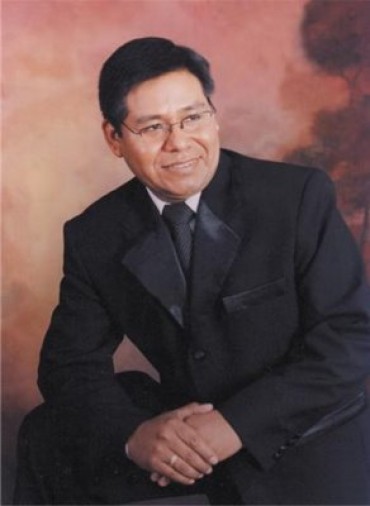
Cope Wins Short Story Prize 2010  Graduate School of Literature at the Universidad Nacional Mayor de San Marcos, Daniel Amayo Magallanes (Lima, 1980) just get the top spot Short Story Award 2010 Cope conferred by PetroPerú, in recognition of his story "ayaymama." Cope The Second Tale of 2010 was to the Elmer López Guevara for his story "The man who had half die", the third to Ivan Loyola Velarde, for "An alchemist in the Caribbean." The jury was composed by Gustavo Rodríguez, Edgardo Rivera Martínez, Mudarra Américo, Pedro Cateriano and Ricardo González Vigil. Daniel Amaya was co-founder of poetic Coito Ergo Sum. In 2003, ranked third in the Second Biennial Competition in honor of César Moro, organized by the Faculty of Arts and Sciences at the Universidad Nacional Mayor de San Marcos. He currently serves as a member of the editorial board of the journal Contexts. critical review of literature and literary magazine Ink Express.
How to read a poem (III)  's book Terry Eagleton is structured in six chapters. In the first ("The functions of criticism"), the author points out how "the language of a poem is establishing their ideas" (p. 10). Says that the great critics provide a dual focus: on the structure of the work and cultural contexts. They are success stories: Bakhtin, Benjamin, Auerbach, Curtius, Burke, Wilson, Said, Trilling and Empson. For the Cambridge School (FR Leavis and IA Richards), poetry was an indirect form of political criticism. Eagleton notes that, currently, we are in a situation
algid: "If most of your professional (literary criticism) have become less sensitive to the literary form, some of them also view with skepticism the social and political critic . At present, much of that political analysis has been transferred to cultural studies, but cultural studies, by contrast, have often ignored the traditional project analysis form. The two areas of study have learned little from each other "(p. 25). This devastating critique of Eagleton to a form of Cultural Studies stresses the need to strike a balance between formal analysis and the political approach of the socio-cultural contexts.
In the second chapter ("What is poetry?"), Eagleton argues that the poems are moral statements, because they show no moralizing or didactic purpose, but because they deal with human values \u200b\u200band they do so fictional, "'fictionalize '(...) is to separate a written text of his immediate empirical context and made to serve a broader purpose "(p. 42). The author stresses that poetry constituye una institución social. Aunque un poema posee un fin en sí mismo, tiene consecuencias de tipo práctico para nuestra cultura. Es como una ceremonia --remarca Eagleton-- que se inserta, a su manera y con un estilo propio, dentro de la praxis humana.
(Continuará...)
Foto(fuente): http://current.com
Mauro Mamani Macedo Cope Wins Essay Prize 2010  Mauro Mamani Macedo , profesor de la Universidad Nacional Mayor de San Marcos, obtuvo el Premio Internacional de Ensayo Copé 2010 en mérito a su ensayo José María Arguedas…Urpi, Firu, Quri, Sonqoyky . He holds a degree in literature and linguistics at the University of San Agustin de Arequipa and MA from the University of San Marcos. Has also concluded in the Dean of America Ph.D. in Peruvian and Latin American literature. He has published the poetry collection word Intimate (1998) and books of literary criticism Manuel Scorza. Tribute and memories (2008) and Andean Poetics, Puno (2009). The jury (comprised of Marco Martos, Jorge Valenzuela, Ricardo Silva-Santisteban, James Campodonico and Alonso Cueto) also awarded two honorable mentions: Eduardo Torres Arancivia by The power of words ... speeches, sermons and political history of Peru, and this blogger for César Moro, "a cannibal of culture? Congratulations to Mauro Mamani for winning such an important award.
Photo (source): http://www.losandes.com.pe/recursos/fotos/2869_370x0.jpg
How to read a poem (II)  How to read a poem (Madrid: Akal, 2010) attempts to illuminate the road in the desert. With his usual didactic spirit, Eagleton begins development de sus ideas comprobando una dramática situación: "La mayoría de los estudiantes, cuando se enfrentan a un poema o una novela, de forma espontánea, derivan hacia lo que se conoce como 'análisis de contenidos'" (p. 10). Nuevamente, levanta la cabeza el contenidismo y de ello, nosotros, los docentes, somos, en gran medida, responsables. No hemos ilustrado lo suficiente al alumno respecto de la necesidad de que reconozca el valor del trabajo con el lenguaje que realiza el escritor, esa orfebrería que un autor como César Vallejo realiza de modo hacendoso. Sin el conocimiento de ese mecanismo de relojería que significa la labor de un artista con la palabra, no puede un joven estudiante adentrarse en la senda de la crítica literature. No one denies the importance of articulating the comprehensive reading of literary texts to the analysis of the vast cultural contexts, but students should educate his artistic sensibility from primary school. Two factors are also the responsibility of the student's interest in little formal analysis: the press and the internet. In Peru, journalists tend to write with a major oversight in the formal setting: the language of daily evidence to the letter, expressive scandalous poverty. In addition, add the reign of homo videns (described by Giovanni Sartori), ie the man who sees, who has beaten the man who reads traditionally. The educators have failed to turn the nut and have not thought creatively about how to respond to the crisis of "written culture" versus "visual culture." This is not to put more computers in schools or universities, but the challenge that puts us on a daily basis, the knowledge society, where everything changes, minute by minute, dramatically. Eagleton notes, "may seem strange that a literary theorist with political leanings as I call attention to the words on the page. Does the score is one thing and politics is quite another? You may doubt that such a distinction is consistent. It would be very difficult demonstrate how the score on the writing of DH Lawrence, as does creating a fluid and spontaneous effect is related to his vision 'organic' in the world, and this in turn with his critique of industrial capitalism. There is the way policy is no policy content. The form is not a way to deviate from the story but a way to access it "(p. 17). (To be continued ..)
 Photo (source): http://
How to read a poem (I) s  Currently, an area of \u200b\u200bliterary criticism it is fashionable to forget the analysis of literary form. There is the mistaken notion that if the researcher, specializing in poetry, it stops at the approach of a rhyme, the kind of verse or rhetorical figures, then rack their brains in banalities. This type of hermemeneuta is described as "formalist", "irresponsible" politically speaking, then, on the one hand, people are starving, and, on the other hand, this "gentleman" is concerned by the pace of sonnet. How can it be - it is argued - that if there is so much gender violence or racism in the world (as criticism, by the way), someone could care about the score a poem? Roland Barthes, Mythologies , said that some formal analysis takes us away from the story, but much closer to us powerfully formal approach to the latter. Therefore, we conclude, a history of poetic forms or narrative or dramatic is a project to be carried in literary criticism in Peru. I just finished reading a book highly suggestive and written by a neo-Marxist thinker: How to read a poem (2010) by Terry Eagleton. The book, originally published in English in 2007 ( How to read a poem ) by the celebrated author of Introduction to the Theory literary, Benjamin or towards a revolutionary criticism or After theory is a real bucket of cold water on those who, from a socio-historical, believe they have the right to forget the analysis of literary form. Professor, University of Manchester, away from all content compilers (a trend that reduces the poetic and narrative analysis exclusive examination of the contents of the work), made a passionate advocacy of the literary approach and shows a sensitivity capable of paying attention to the structural details of a poem articulated the ideology behind this. I think it was a success this theoretical UK published in recent years, moves to an essay reflecting on the need to rethink our current agenda. Before summarizing the ideas of Eagleton and critical judgmental about this, I have a personal anecdote. A couple of years ago I attended as a speaker at an international conference on literature. When I saw the event's program, I had the feeling of "meet-the-air, not knowing if I was in an international seminar on food, advanced mathematics or dressmaking. I agree, of course, to expand the body of Latin American literature, including statements such as, for example, myths, stories Andean Aymara and Mapuche Amazon, I can also Condec that literature is capable of being analyzed by sociologists, anthropologists and psychoanalysts. However, I do not think anything goes at a conference of Latin American literature. One can focus on Andean myth, but I believe that a fundamental aspect is the analysis of texts (written or oral) or, in another context, a theoretical approach is relevant, very useful indeed, but that does not give up its possible application to the approach of poems or stories (oral or written) or plays, for example. I can not ban (because fascist would do) to a sociologist or psychoanalyst to analyze a sonnet
 ,
but it would be important to pay some attention to language and not stay in a mere description of the contents. (To be continued ..)